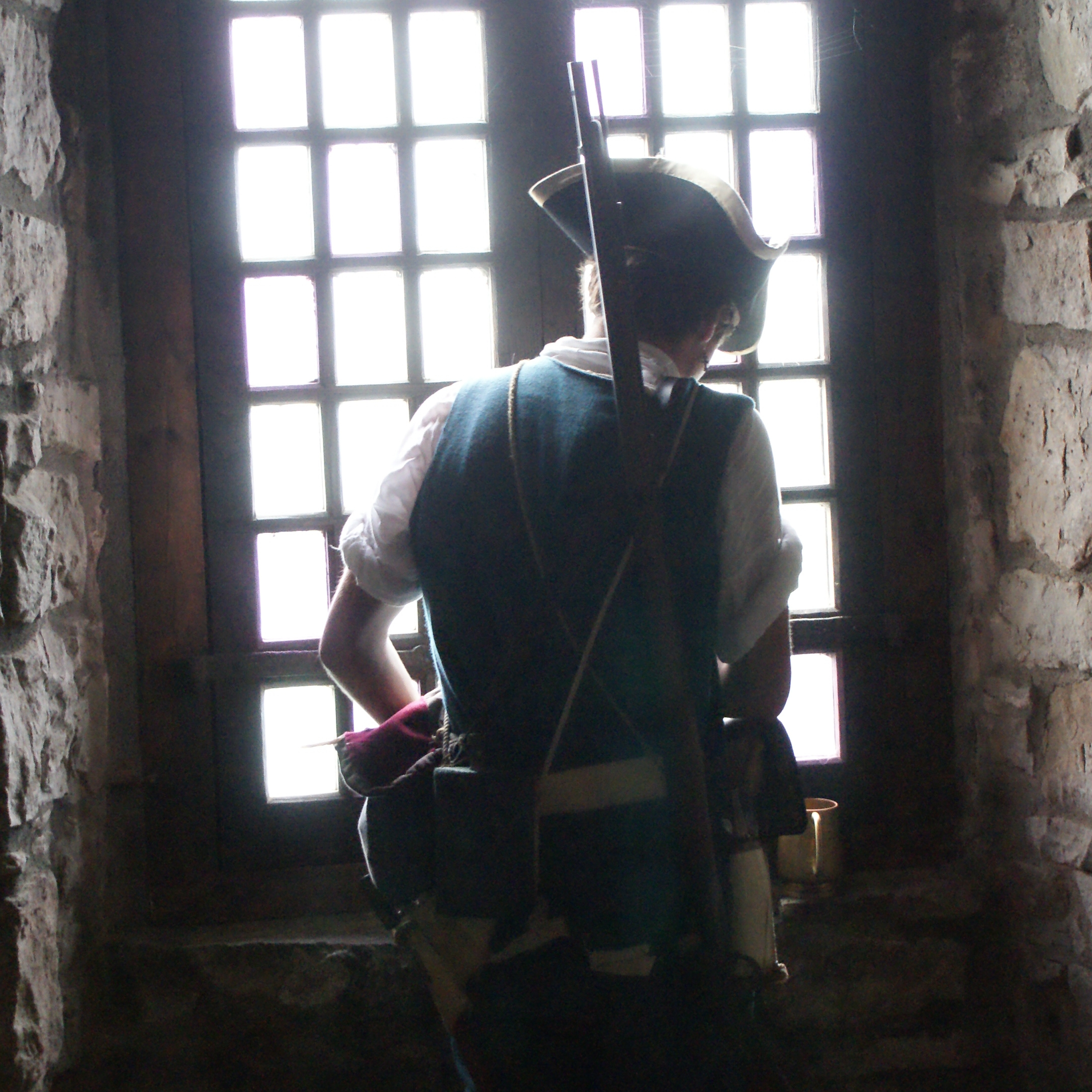
May 17-23, 2026, I had the amazing opportunity to take part in the first ever Society for Pennsylvania Archaeology (SPA)/Pennsylvania Archaeological Council (PAC) Field School in Halifax PA. This week long field school was designed to give a basic level of experience for those with interest in the archaeological field whether you are a student at a university or a student of life. Being a historian this is something that has always been an interest of mine and has become more of an interest since completing my history degrees and it is important to have a good understanding of archaeology when working in the history field.
We all arrived at Camp Hebron near Halifax PA on May 17; there were students that had just graduated college before arriving, students in their undergrad, graduate students, PhD students and those like me who are seeking training as avocational archaeologists. The age range was quite literally 20 – 70 (and maybe older).
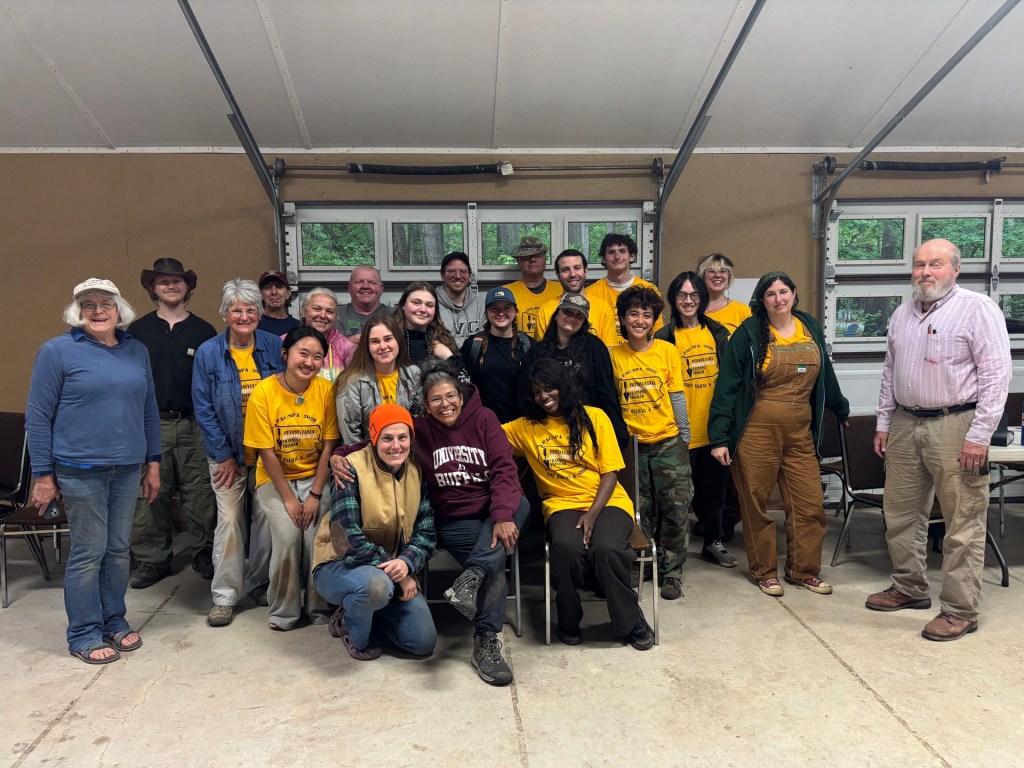
Above: Most of the 2026 SPA/PAC Field School Cohort, and instructors.
We all received an overview of the two sites where we would be working, as well as a review of ethics and notable laws such as NAGPRA (Native American Graves Protection and Repatriation Act). We then received tours of both sites. The sites where we would be digging were the Shoop Site, a Paleo-Indian site on private property outside of Halifax, PA; we would also be digging at the site of Fort Halifax, a Pennsylvania Militia fort built during the French and Indian War (7 Years War). The plan was to split the team in half and each group would spend three days at one site, and three days at the other, sadly the weather would not make that possible.
On the first day of digging my group opened up multiple 1 meter by 1 meter test pits, based on ground penetrating radar and magnetometer views of the site. Fort Halifax sat in between the Susquehanna River, and what would later be the Susquehanna Division of the Pennsylvania Canal system. Some of the soil at the site is remnants of the fill from the prism of the canal (the dirt that had been dug out of the canal to form the towpath. We very quickly came down upon evidence of habitation including redware sherds of pottery, as well as whiteware, and nails. Some of the pits had a significant amount of stone cobbles which could be consistent with chimneys from the building at Fort Halifax.
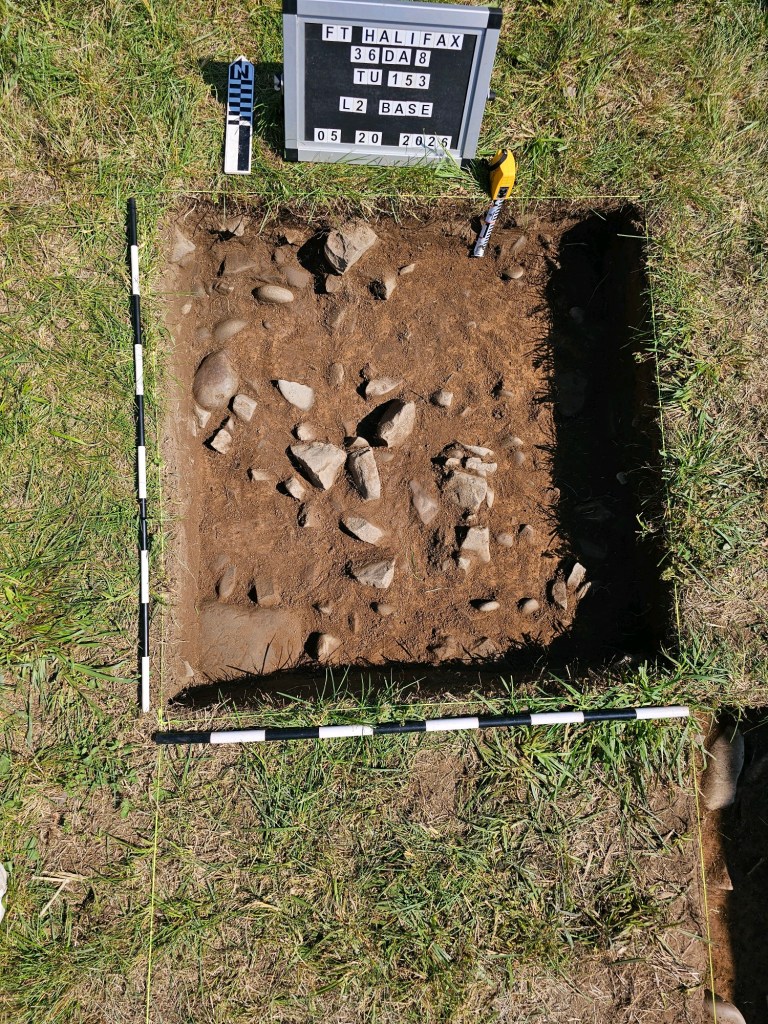
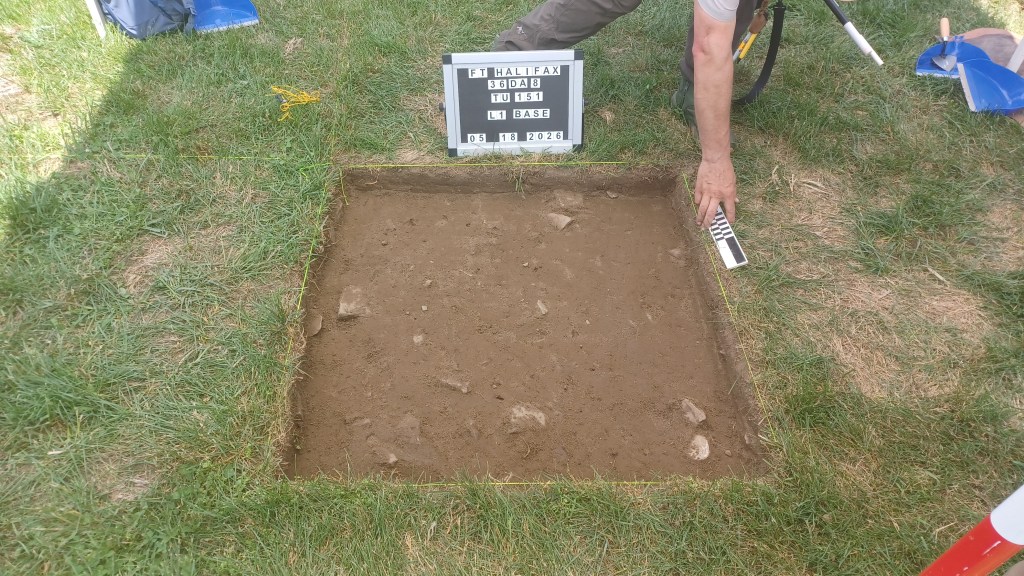
The work is not just simply digging with a shovel, it is using a sharpened trowel and going centimeter by centimeter looking for the past. While we were digging in the test pit I was working on, one of my cohorts found a Susquehanna Broadpoint and later we would find another lithic that was not completed in the same test pit. We learned to map the stratigraphic levels as well as draw what we encountered at each level.
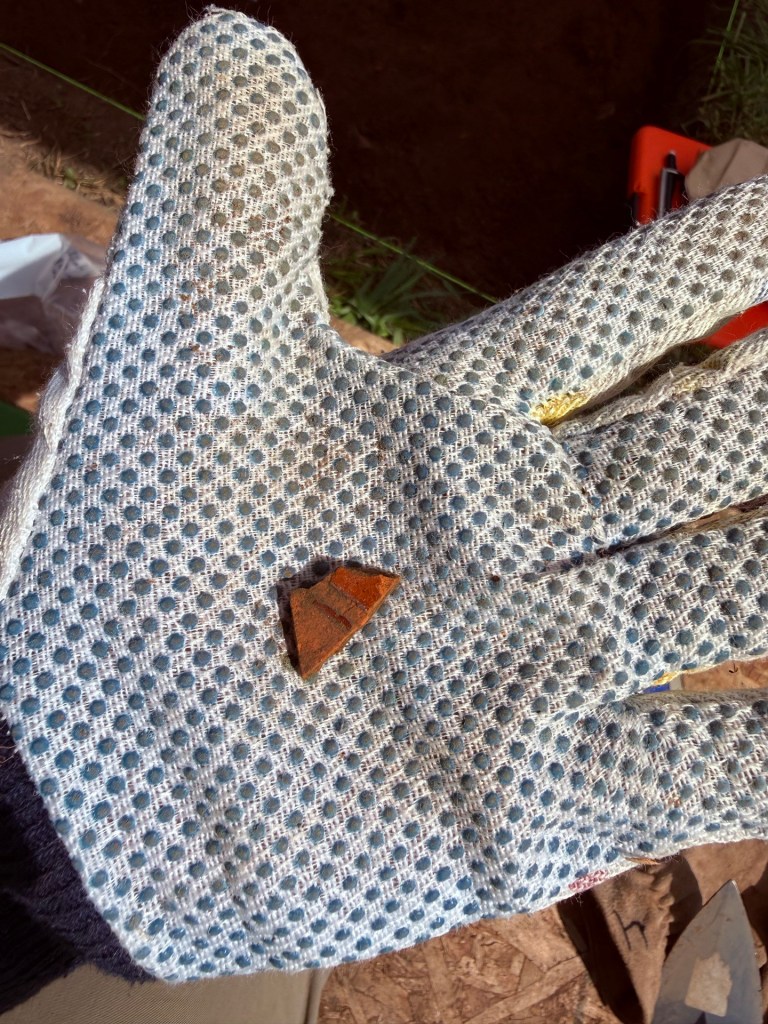
Above: Redware Pottery.
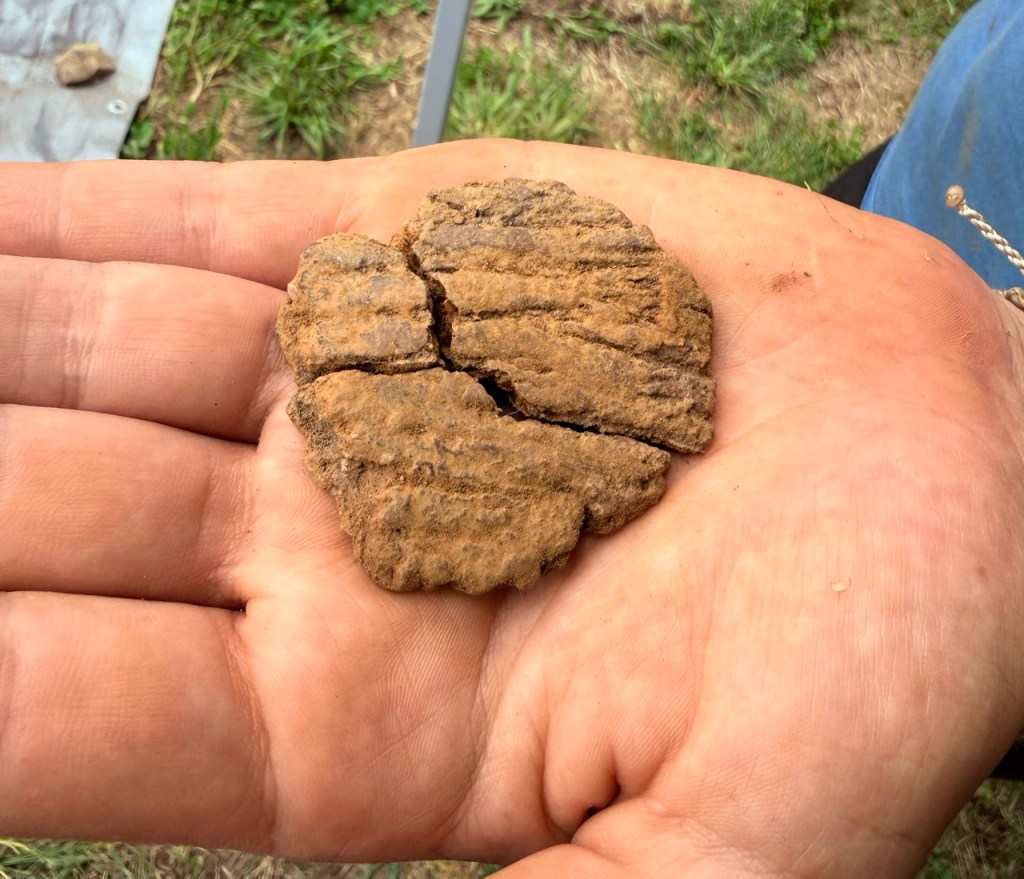
Above: cordware pottery.
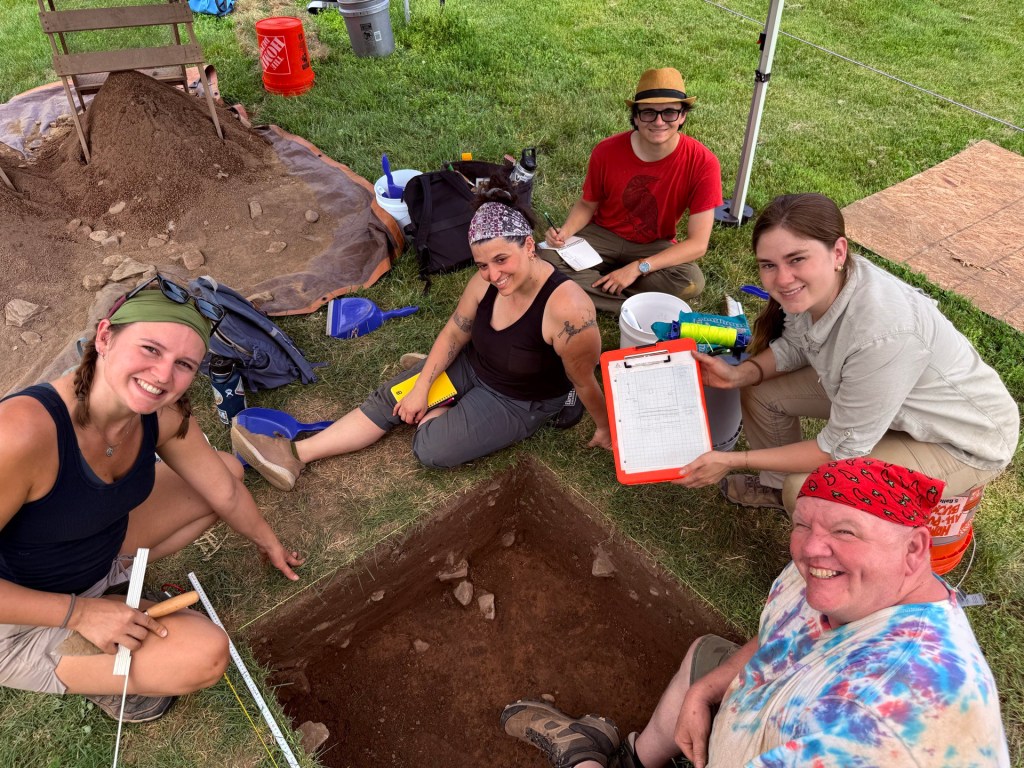
My team at Fort Halifax.
At the Shoop Site, the digging was different, we were digging 25cm by 25 cm blocks in thick clay. the troweling was more aggressive because most of the artifacts to be found would not be found until the dirt was screened with both quarter inch and 1/8 inch screens. The search at Shoop is known for the knapping of Onondaga Chert which can be found in Western NY and Southern Ontario, this rock had traveled over 250 miles to be worked in the Susquehanna River Basin, thousands of years ago.
People may wonder why we care about tiny pieces of stone that were worked by humans 9,000 to 13,000 years ago. That answer is how we understand the past, through finds like this, we can see travel patterns and understand where our ancestors lived, how they found food, and what they were eating. We all have a human connection to the past no matter what our lineage, we as human all developed in similar patterns in the past. Our past is the great equalizer, and how different cultures mixed in the pre-historic past is how we developed new tools, new language, and where our modern cultures come from.
Each artifact, whether paleo-indian, or historic period tells us something about the people. our ancestors, that lived in that time. It shows us characteristics of life and human development. Archaeology, Anthropology, Sociology, and History is how we understand life from the ancient world to the modern world.
Another aspect that is important in any field school is the comradery that is built between the attendees and the staff and assistants. Much like The Breakfast Club, we all came from different backgrounds and different levels of knowledge for this event, and we left with friendships that will last. We shared dinners at local restaurants, and I even cooked a Three Sisters Soup over the fire. While my wife joked about me being away for summer camp, it very much had that feel.
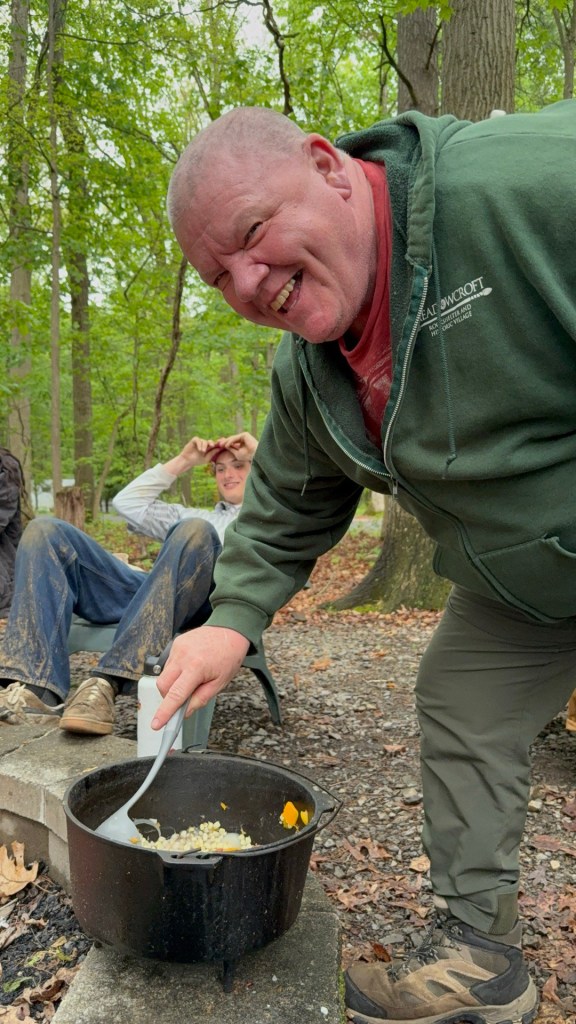
Cooking the Three Sisters Soup!
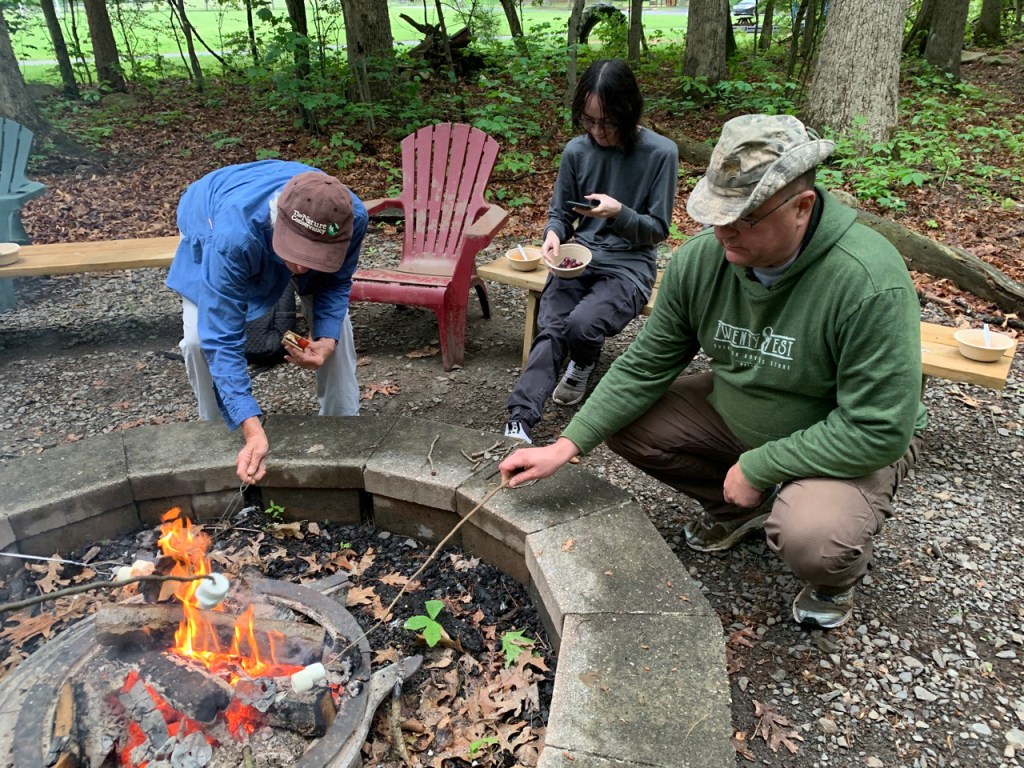
Smores!
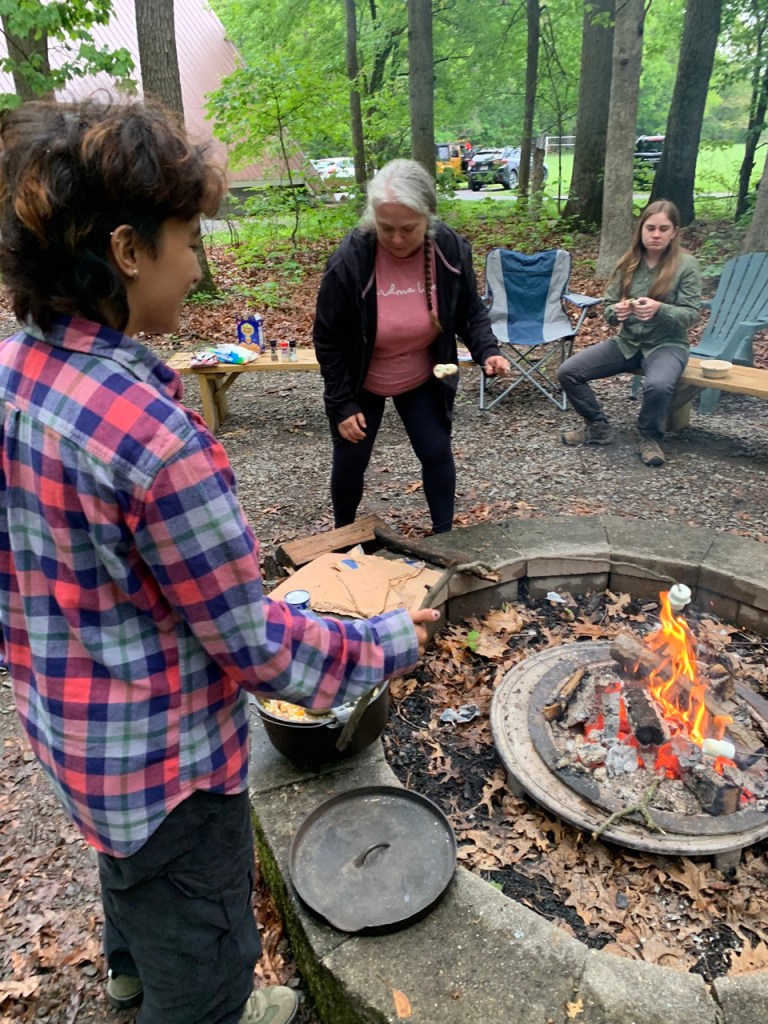
More Smores!
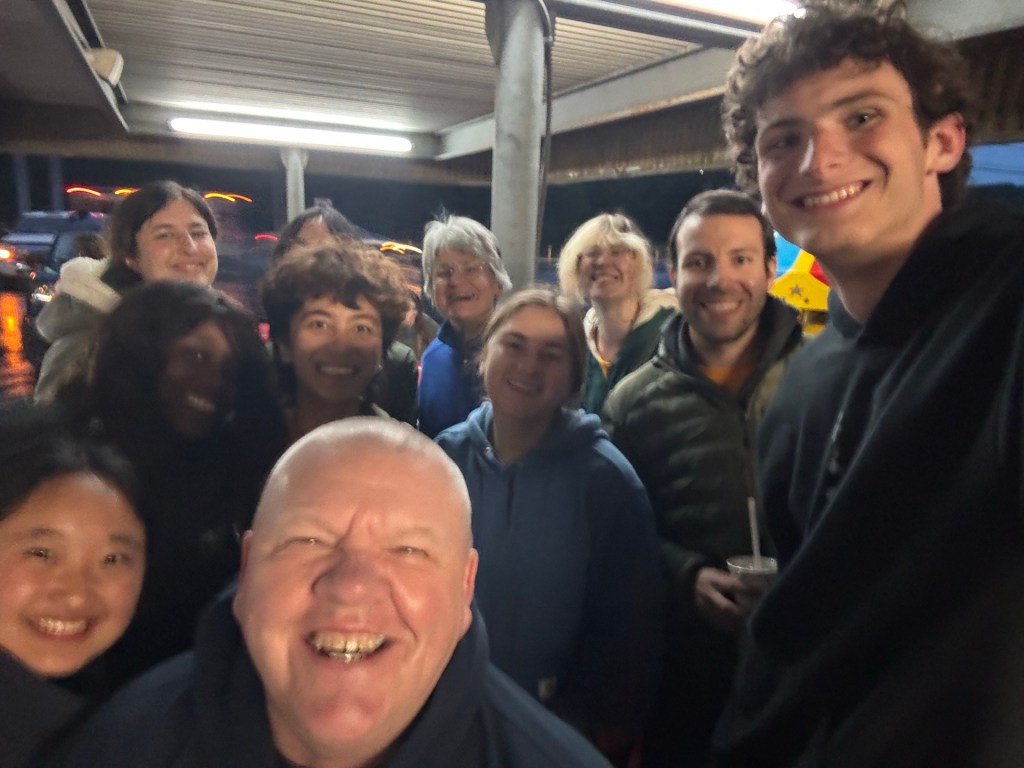
Final Dinner at Red Rabbit Drive-in in Duncannon PA.
I really want to thank the Society for Pennsylvania Archaeology, and the Pennsylvania Archaeological Council for this amazing opportunity. I especially want to thank Dr. Sarah Neusis, Dr. Kurt Carr, Dr. Jonathon Burns, and Katherine Peresolak for their teaching and guidance. I would also like to thank all the teaching assistants, Emily, Heidi, Ken, Kevin, Lauren, Sarah, Judy, and Jared for everything you shared with us to help us become better in this field.
If you are interested in future field schools and opportunities and you are in Pennsylvania, check out the SPA website: https://pennsylvaniaarchaeology.com/


Leave a comment